How to Lose 1 Pound of Weight

Part of losing weight means taking in fewer calories than you burn. Even the latest weight loss medications and intensive interventions like bariatric surgery work in a similar way: helping you consume less than your body needs to maintain your current weight.
Calorie counting can help you lose weight, but it has its limitations. Here’s what to expect while using the common goal of 1 pound (lb) of weight loss as an example scenario.
How Many Calories Do You Need to Burn to Lose 1 Pound?
While the 3,500-calorie guideline can work in broad strokes for some people, it’s not always that simple.
“It is accurate that a pound of body fat contains approximately 3,500 calories, but a calorie deficit of 500 calories [per day for one week] does not necessarily equal a pound of lost fat for every person,” says Gary Foster, PhD, chief scientific officer at WW (formerly Weight Watchers), who is based in Newtown Square, Pennsylvania.
How BMR Can Help Some People With Weight Loss
If you’re counting calories to lose weight, start by estimating how many calories you burn — that is, use for energy — on an average day. To do this, you can turn to an online metabolic rate calculator. These help determine basal metabolic rate (BMR), which refers to the number of calories the body burns every day for energy to maintain basic biological functions.
Your BMR is an estimate of how many calories you burn in 24 hours — and how many calories you need to eat every day to simply maintain your weight, says Sari Greaves, RDN, of LBS Nutrition in East Brunswick, New Jersey.
The old 3,500-calorie rule would predict that if you achieve that 500-calorie deficit at the end of each day, you would lose 1 lb in seven days. But that equation tends to oversimplify and overestimate losses. Ultimately, age, activity level, body size, and body composition all influence how many calories a person burns throughout each day.
Next up video playing in 10 seconds
How to Lose 1 Pound
How to Lose 1 Pound
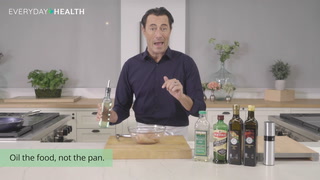
An Easy Way to Reduce Fat While Cooking
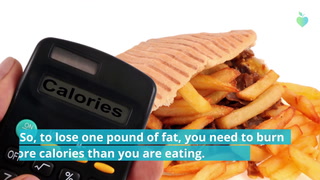
Why Reducing Calories Doesn’t Always Work
Caloric reduction doesn’t always guarantee weight loss, says Audra Wilson, RD, CSCS, a bariatric dietitian and strength and conditioning specialist in the Northwestern Medicine metabolic health and surgical weight loss program at Delnor Hospital in Geneva, Illinois.
“It is a start, but it’s impossible to simply create a deficit and calculate certainty with weight loss,” she says. “There are many more factors involved, not least of all compensatory measures our bodies take in an effort to maintain homeostasis.” In other words, the body tends to fight back against weight loss.
Counting calories cannot prevent this frustrating weight loss side effect, but it can help guard against unintentional overeating as your hunger increases.
Ultimately, it will take trial and error to learn how many calories you need to cut to lose weight. A BMR calculator is only a starting point.
Is Fast or Slow Weight Loss Better?
If you’re losing more than a couple of pounds per week, you’re at a higher risk of not having enough vitamins and minerals in your diet, says Greaves. That’s not because fast weight loss itself deprives the body of nutrients. Rather, when you cut calories to the point of rapid weight loss, your overall food (and therefore nutrient) intake can be unhealthily low.
Anyone maintaining a large caloric deficit, no matter their weight loss strategy, should work with a clinician or nutritionist to make sure that they are meeting their nutrient goals. Even with a conservative deficit of a few hundred calories per day, if you are drastically reducing processed foods or carbohydrates, you may quickly lose water weight, Greaves says.
It’s easier to stick with a wholesome diet that you enjoy, rather than a crash diet you can’t wait to give up, even if it means your weight loss will be more gradual.
For the same reasons, weight loss experts are typically mistrustful of fad diets that promise extreme, rapid weight loss or exclude entire food groups.
“You can lose weight eating 1,200 calories of anything; but in order to be healthy, the kinds of calories you eat matter,” says Dr. Foster, who advises choosing more foods that are high in protein, unsaturated fats, and fiber and fewer that contain lots of saturated fat and added sugars.
Depending on the weight loss approach you take, your food choices will look different. A registered dietitian-nutritionist can help you build your plate in a way that supports nutrition and your weight loss goal.
Diet and Exercise for Weight Loss
“Diet and exercise go hand in hand,” says Wilson, adding that for some people, diet changes can help take the weight off and exercise can help with maintenance.
Finding the right tools can make a big difference for your weight loss journey. Check out our curated list of the best weight loss apps to help you track food intake, set goals, and achieve your fitness objectives.
Small changes that increase your activity and reduce your caloric intake can lead to more sustainable weight loss.
Finding the right tools can make a big difference for your weight loss journey. Check out our curated list of the best weight loss apps to help you track food intake, set goals, and achieve your fitness objectives.
Tips to Create a Calorie Deficit
Try adopting these diet and lifestyle habits that can support a goal to lose 1 lb.
- Mix up your workout. Strength training and cardiovascular (aerobic) training have distinct health benefits, and each can help contribute to your weight loss efforts.
- Prioritize protein. During weight loss, consuming even more protein than the recommended dietary allowance enhances fat loss while helping retain muscle mass and bone density.
- Eat whole grains. Whole grains fill you up and take longer to digest than the simple carbohydrates in processed flour or white rice. Whole grains also contain lots of healthy fiber, which may further aid weight loss.
- Think before you drink. Sodas and sweetened fruit juices contain tons of calories and added sugar, which can contribute to weight gain and hurt your health in a variety of ways. Alcohol is another source of calories to keep in mind.
- Eat regular meals. “Skipping meals can cause dips in your blood sugar and make you more prone to overeating later on in the day,” Greaves says.
The Takeaway
- If you want to lose weight, achieving a calorie deficit is important.
- Although the math is not as reliable as once thought and challenges can arise, counting calories has merit.
- Even if you can't track calories indefinitely, doing so for a short time can provide meaningful insights into your dietary habits and provide longer-term benefits.
Resources We Trust
- Mayo Clinic: Weight Loss: 6 Strategies for Success
- National Institute of Diabetes and Digestive and Kidney Diseases: Weight Management
- U.S. Department of Human Health and Services: Physical Activity Guidelines for Americans, 2nd Edition
- Cleveland Clinic: Exercise and Fitness
- U.S. Food and Drug Administration: FDA’s Nutrition Initiatives
- The 3500-Calorie Weight Loss Myth. American Institute for Cancer Research. March 5, 2015.
- Calories on the Nutrition Facts Label. U.S. Food and Drug Administration. March 5, 2024.
- Hall KD. Energy Compensation and Metabolic Adaptation: “The Biggest Loser” Study Reinterpreted. Obesity. 2022.
- Fogarasi A et al. The Impact of the Rate of Weight Loss on Body Composition and Metabolism. Current Obesity Reports. June 2022.
- Li X et al. Distinct Factors Associated With Short-Term and Long-Term Weight Loss Induced by Low-Fat or Low-Carbohydrate Diet Intervention. Cell Reports Medicine. December 20, 2022.
- Teo PS et al. Texture-Based Differences in Eating Rate Influence Energy Intake for Minimally Processed and Ultra-Processed Meals. The American Journal of Clinical Nutrition. July 2022.
- Mehrtash F et al. I Am Taking a GLP-1 Weight-Loss Medication—What Should I Know? JAMA Internal Medicine. July 14, 2025.
- Jiang BC et al. The Benefits of Exercise Training in Combination With Weight Loss Therapies. Diabetes. July 8, 2025.
- Jakicic JM et al. Physical Activity in the New Era of Antiobesity Medications. Obesity. February 2024.
- Patel ML et al. Self-Monitoring via Digital Health in Weight Loss Interventions: A Systematic Review Among Adults with Overweight or Obesity. Obesity. February 23, 2021.
- Physical Activity and Your Weight and Health. U.S. Centers for Disease Control and Prevention. December 27, 2023.
- Moon J et al. Clinical Evidence and Mechanisms of High-Protein Diet-Induced Weight Loss. Journal of Obesity & Metabolic Syndrome. September 30, 2020.
- Kelly RK et al. Increased Dietary Fiber is Associated with Weight Loss Among Full Plate Living Program Participants. Frontiers in Nutrition. April 17, 2023.
- Sugary Drinks. Harvard T.H. Chan School of Public Health. August 2023.

Lynn Grieger, RDN, CDCES
Medical Reviewer
Lynn Grieger is a registered dietitian-nutritionist, certified diabetes care and education specialist, certified personal trainer, and certified health and wellness coach. She comp...

K. Aleisha Fetters
Author
K. Aleisha Fetters is a Chicago-based fitness writer and certified strength and conditioning specialist who empowers others to reach their goals using a science-based approach to f...